
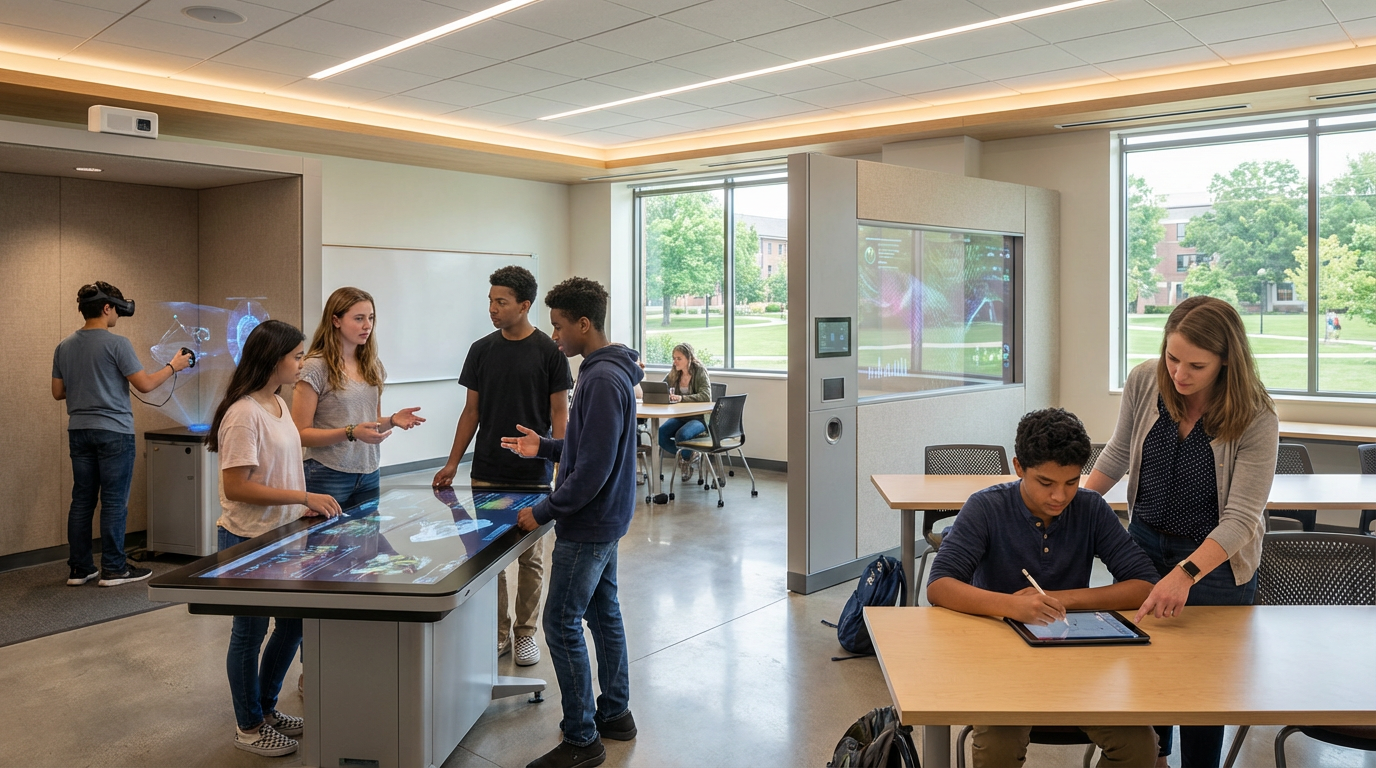

If there is one takeaway from the start of 2026, it is that the "pilot phase" of artificial intelligence in education is coming to an end. We are moving rapidly into an era where AI for schools is less about novelty and more about routine, infrastructure, and pedagogical strategy.
Recent data from Google's 2026 report paints a clear picture: learning has become the primary reason people use AI. With 81% of teachers and 85% of students now utilising these tools, the adoption rate in education is outpacing the global average. However, as usage spikes, the conversation is shifting from "how do we use it?" to "how do we use it well?"
The Policy Landscape and the Digital Divide
The UK has recently become a hotbed for this discussion. The Tony Blair Institute for Global Change recently cited the NSWEduChat initiative as a precedent for a national AI teaching assistant, highlighting the global appetite for scalable solutions. Their argument is pragmatic: with crushing teacher workloads and retention issues, AI for schools acts as one of the few remaining levers to increase capacity without simply hiring more people.
However, a warning accompanies this potential. Current adoption in England is shallow and uneven. Independent schools are moving faster with better devices and training, while state schools lag behind. Without a deliberate, funded rollout, we risk creating a new educational divide.
To counter this, the UK government is investing £23 million to trial EdTech tools in over 1,000 schools. UK Education Secretary Bridget Phillipson told the Bett UK conference that AI shouldn't be treated like mobile phones; if implemented correctly, it could be a massive leap forward for learning, provided it includes safeguards to prevent harmful content.
Safety and Standards: The "Hints, Not Answers" Approach
As procurement ramps up, safety standards are evolving. The UK Department for Education's updated 2026 safety standards serve as an excellent checklist for any system implementing AI for schools.
The most vital update concerns cognitive development. The standard effectively argues that the default output of an AI shouldn't be a full answer. Instead, it should offer hints, partial steps, and prompts that encourage a real attempt by the student.
Furthermore, there is a strong emphasis on emotional safety. We must ensure tools are not anthropomorphised to the point where children form "friendships" with bots. Safeguards against manipulation and persuasive design are now considered first-class risks, not afterthoughts.
The Human Element: Empathy and Judgement
Perhaps the most interesting evolution is how we view the role of the human in the loop. A recent letter in the NYT noted that if AI can produce a polished interpretation of a text in seconds, the student's task must shift. The goal is no longer "produce the text," but "evaluate the text."
This sentiment is echoed by a Brookings Institution piece on raising resilient learners. If AI is baked into kids' lives, the skills that matter are the ones that fade if the machine does too much of the work: critical thinking, pushing through difficulty, and managing human relationships.
Surprisingly, AI can actually aid in these human connections. Rather than just saving time on admin, some educators are using AI as a "mirror" to practise difficult conversations or check the tone of their emails. It turns out that AI for schools can be used to strengthen empathy, helping us be more intentional with our words rather than just checking off tasks.
Managing the Transition
Despite the optimism—with 67% of teachers believing AI will improve teaching quality—challenges remain. A new paper in Frontiers in AI highlights that "technostress" is real. It's not just about the volume of work; it's about the clunkiness of the tech and role ambiguity. If the product is difficult to use and the teacher's role becomes fuzzy, stress levels rise.
For business leaders, AI is the top concern for 2026, according to KPMG's latest survey. The world students are graduating into is transforming.
Ultimately, successful implementation requires a village. Parents must set the tone at home, policymakers must provide the guardrails, and schools must provide the structure. The teams that win this year will be the ones that turn AI for schools from a shiny new toy into a routine, safe, and deeply human-centric part of the classroom.